
CORE STAGE 01 / Establish your starting point
KESP™ BASELINE
Professional development for Kinetic Engagement Sparring Partners™ supporting PSS-K9™ teams. Practical work connects the sparring partner, the handler and the PSS-K9™ within the course’s supervised scope.
Bring your experience. Establish a baseline you can explain.
Build safe working habits, a shared vocabulary and a clear record of your timing, movement and presentation.
PHASE TWO / 2027 PSS-K9™ CLASSES
2027 class sign-ups
open November 15.
PSS-K9™-integrated training: develop movement, communication and coordinated work with your Professional Special Services canine. K9 participation and assignment are confirmed for each course.
The official 2027 class rollout begins November 15, with full class descriptions and enrollment, including KESP™ certification classes.
First come, first served. Subject to eligibility, prerequisites and seat availability.
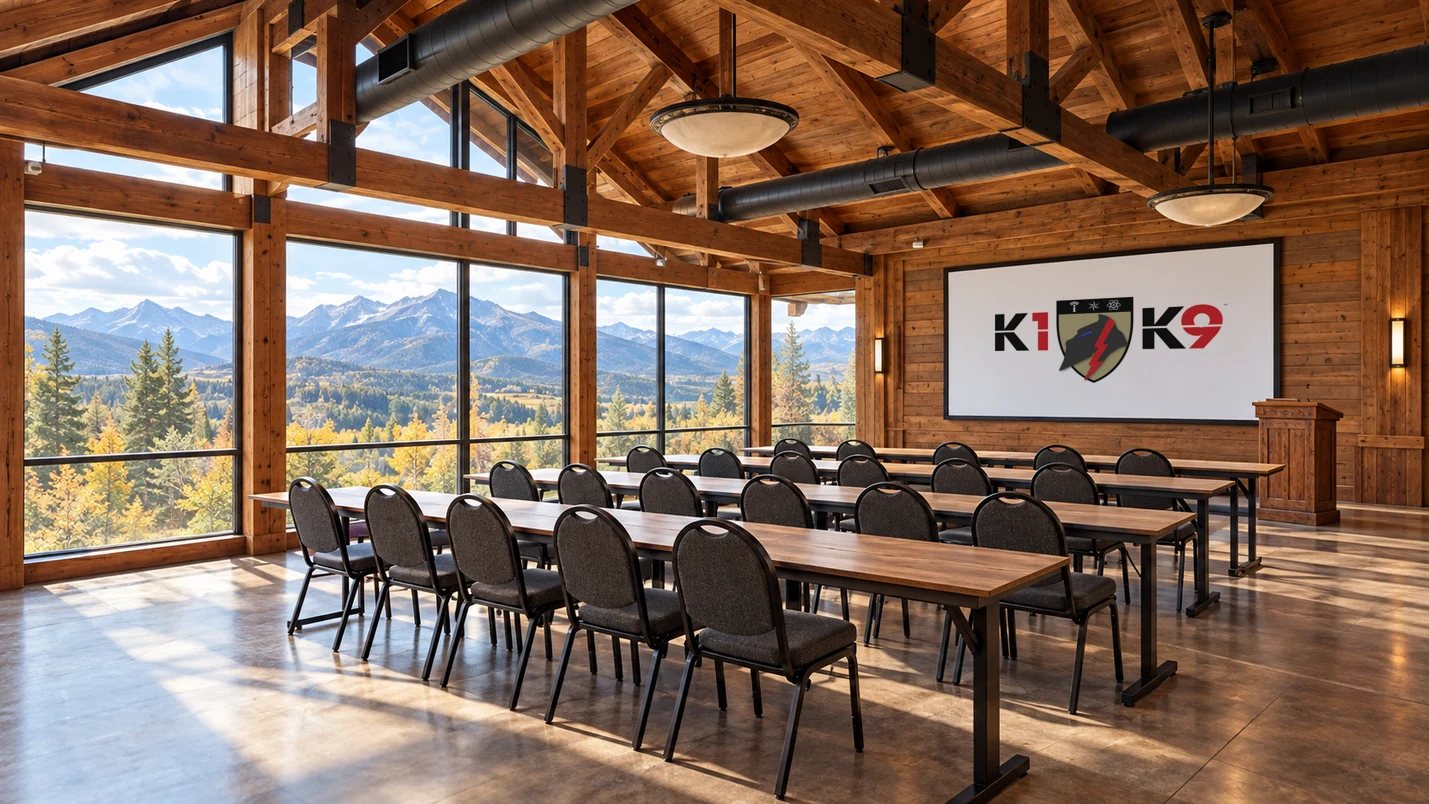
High-Performance classes: an exclusive, beautiful training location surrounded by the mountains of Montana. For security reasons, the exact location and arrival details are shared privately with confirmed students.
Included in your Montana tuition +
- Accommodations
- Three meals daily
- Training and all supporting materials
- Transportation to and from the airport
- K9 crates
- Daily K9 nutrition
- Access to a K9 grooming facility
- Veterinary evaluation before class begins
Included for all participating students in the Montana High-Performance classes.
Sign-ups open November 15 for classes held in 2027. Individual class dates are confirmed separately. AI-generated classroom illustration; not a photograph of the secured venue.
WHO IT IS FOR
The right starting point.
New and early-career KESP™ students, handlers and experienced decoys seeking structured instruction.
Development objective
Support supervised working-dog training with clear objectives, safe practice and useful feedback for the handler.
These are intended learning outcomes, subject to demonstrated performance. Attendance alone does not establish competence or operational readiness.
WHAT YOU LEAVE WITH
More than “good job.”
- Written opening and closing reflections
- Recorded movement and presentation baseline
- Equipment inspection and readiness record
- A supervised session file with reviewer feedback
Anyone can call a safety stop at any time. No target, result or instructor expectation overrides participant or K9 welfare.
Additional reflection prompts · edited student supplement
Write your answers before practical work. Revisit them with your own recorded evidence at the end of the class. These are supplementary edited prompts, not a replacement for the original Blocks A–D.
- How do you distinguish pressure, threat and sensory load in the approved training context?
- What problem was the repetition intended to address?
- What did the dog actually do, rather than what you expected it to do?
- Can you state the learning objective in one sentence?
- How does that objective fit the dog’s intended role and the handler’s responsibilities?
- What changed during the repetition, and what evidence supports your interpretation?
- What did your own movement and timing contribute?
- What can you conclude from this session, and what remains unknown?
- Who directed the end of the exercise, and was the agreed stop authority respected?
- How did you decide the workload was appropriate and when to stop?
- What can you hand the handler: observations, measurements, limitations and a useful next step?
Students are encouraged to question interpretations respectfully. Safety, context and K9 welfare remain part of every answer.
CURRICULUM / LEARNING + EVIDENCE
Every module has a purpose.
Open a module to see its learning focus and how the work is reviewed. Practical methods belong in supervised instruction, not a self-taught online drill.
01.0The Questions
Define what you intend to teach before practical work begins.
Written baseline, revisited on Day 3 against your session record.
01.1Defined Language
Use shared definitions for pressure, threat, engagement and release.
Written terminology check.
01.2Safety Protocol
Recognize stop authority, participant spacing and emergency responsibilities.
Supervised safety walkthrough: pass or not yet.
01.3Equipment Systems
Select, inspect, fit and care for the equipment authorized for the session.
Documented fit and inspection checklist.
01.4Body Mechanics
Develop balance, controlled movement and awareness of physical load.
Recorded movement screen and instructor feedback.
01.5Signal Reading
Describe observable behavior without relying on labels alone.
Student and instructor reviews of the same video clips.
01.6How Dogs Learn Engagement
Explain timing, reinforcement and the intended purpose of a repetition.
Written knowledge check and supervised discussion.
01.7Target Mapping
Understand defined training-equipment contact zones and presentation criteria.
Video review; equipment-zone readings where supported and verified.
01.8Contact Mechanics
Demonstrate safe, controlled participation in supervised training.
Safety and form rubric.
01.9Counter-Pull Response
Study the source program’s grip-development topic within instructor-controlled practice.
Before-and-after observations; supported pressure and duration measures.
01.10Movement Economy
Distinguish purposeful movement from unnecessary movement.
Recorded review against a defined rubric.
01.11Release Protocol
Support handler-directed release and recognize when to stop the exercise.
Command-to-release interval with the timing method recorded.
01.12Static Subject Guard
Understand controlled, non-contact work around a passive training subject.
Supervised scenario: pass or not yet.
01.13First Session File
Connect a session objective to recorded observations and a clear debrief.
Supervised session and completed evidence file.
ASSESSMENT WITH AN EXPLANATION
Know what is being assessed.
- Physical readiness
- Defined events · pass or not yet
- Written component
- Proposed pass threshold: 80%
- Practical work
- Defined rubric + recorded evidence
- Review
- Proposed multi-reviewer assessment
15 proposed measured credits
The proposed measured credits support the assessment record. The graduate award is K1K9’s exclusive International KESP™ Certification.
Read the full measurement standard ↗Your work, made reviewable.
No fabricated scores, pressure readings or pass results.
Your voice in the review
The proposed student process includes access to the assessment criteria, an explanation of feedback, the opportunity to identify recording errors and a clear next-step plan. Formal reassessment and appeal procedures must be finalized before enrollment.
Sensor readings, video observations and reviewer scores are different types of evidence. Missing measurements stay marked as missing. No single score proves real-world readiness.
PREPARE BEFORE YOU ARRIVE
Entry & requirements.
- One suitable, suit-trained working dog per working student, subject to instructor approval
- Host equipment may be available; your own suit is recommended
- Field and classroom with projector and internet
- Physician’s fitness statement, liability waiver and proof of health insurance, handled through an approved private intake process
ENROLLMENT STATUS
Prepared for inspection.
Enrollment opens November 15, with full class descriptions released that day. Dates and pricing are confirmed separately. Do not send medical, agency or other sensitive records through an unapproved channel.
Acceptance is reviewed separately from membership. Buying a membership, suit or course seat does not award a qualification.
Review hosting & recognition →2027 PSS-K9™ class enrollment opens November 15. Member course details release that day; individual 2027 class dates are confirmed separately.